Septoplasty (Deviated Septum Surgery) in Islamabad & Rawalpindi
If you feel one-side nasal blockage, frequent congestion, mouth breathing, or breathing difficulty that doesn’t improve with sprays/medicines, a deviated septum may be the cause. Septoplasty is a functional nasal surgery that corrects the internal wall (septum) to improve airflow and breathing. At JSK Clinic, we focus on safe, evidence-based care with a clear plan — from consultation to recovery.
Note: Septoplasty is primarily done to improve breathing, not to change the outer shape of your nose.
At JSK Clinik, we redefine rhinoplasty through artistry, expertise, and medical excellence. Whether you wish to refine the shape of your nose, correct breathing issues, or restore harmony after an injury, our approach is rooted in natural-looking, elegant results tailored to your unique facial features.

Why Choose JSK Clinic for Septoplasty?
At JSK Clinic, your septoplasty is planned around one goal: better breathing with safe recovery.
What you can expect:
- ENT-led evaluation and clear diagnosis
- Treatment plan tailored to your symptoms and nasal anatomy
- Modern surgical technique with careful tissue handling
- Clear guidance on recovery timeline and follow-ups
- Transparent discussion of outcomes, benefits, and limitations
- Supportive care before and after surgery
What is Septoplasty?
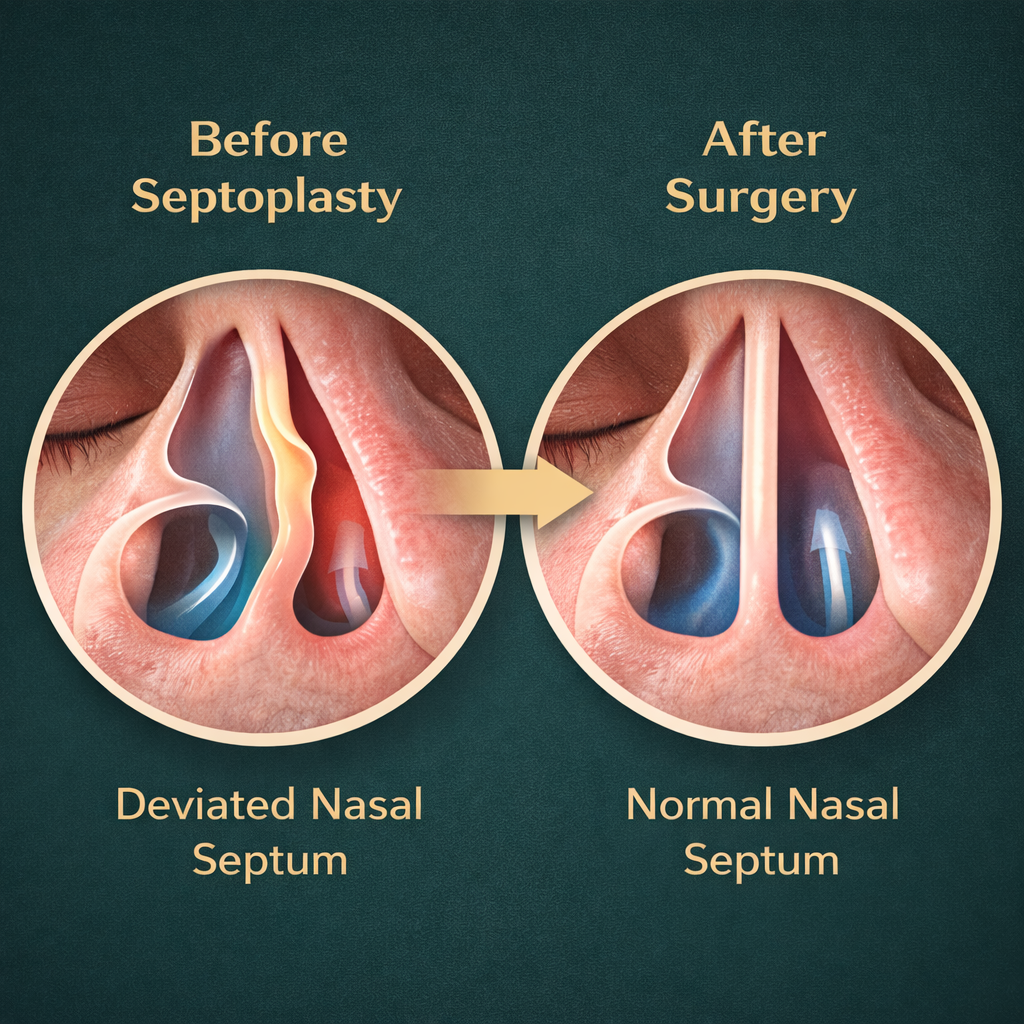
Septoplasty is a surgical procedure to correct a deviated nasal septum — the internal cartilage and bone wall that divides your nose into two air passages. When the septum is bent or off-center, it can reduce airflow and cause long-term blockage.
Septoplasty helps by:
- Straightening the septum internally
- Opening the airflow pathway
- Reducing blockage linked to structural narrowing
Symptoms / Signs
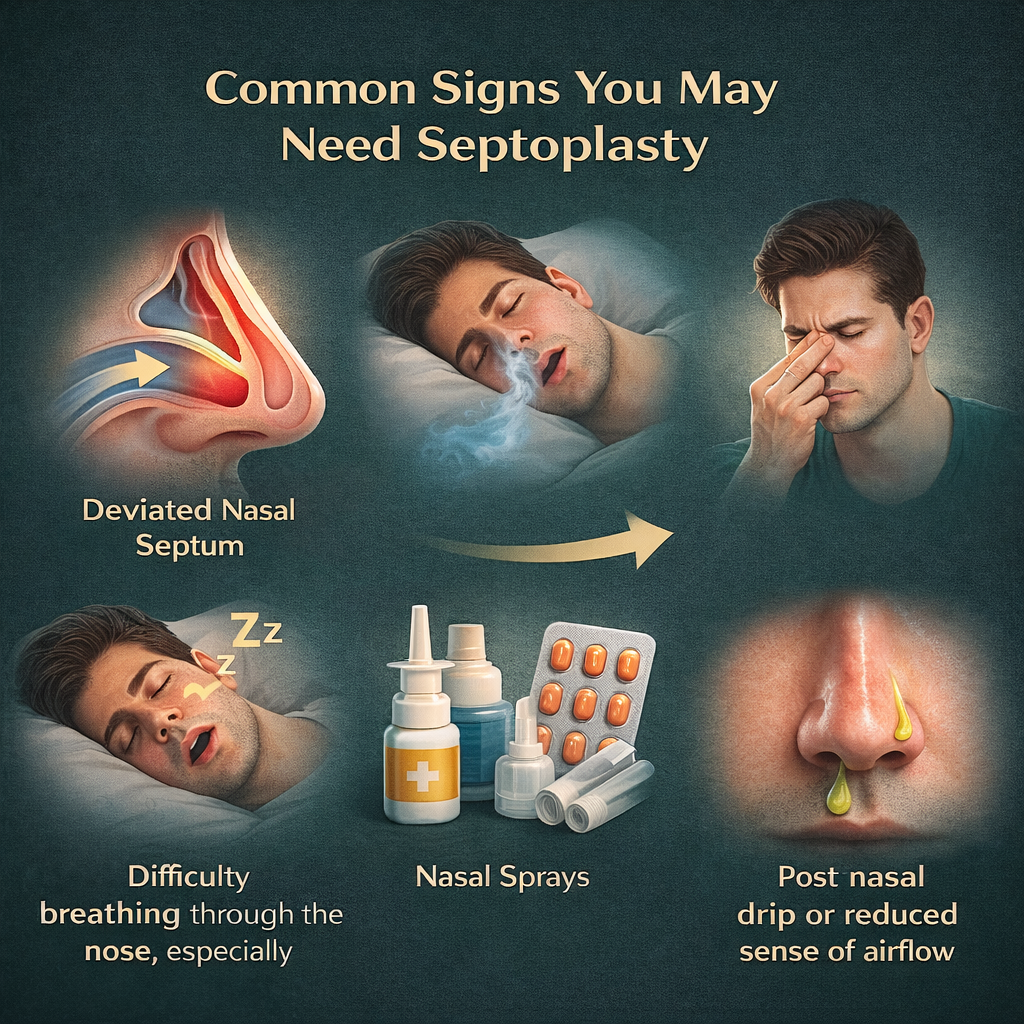
Common signs you may need Septoplasty
- Nasal blockage on one side (or both) most of the time
- Difficulty breathing through the nose, especially at night
- Mouth breathing / dry mouth on waking
- Snoring that’s worsened by nasal blockage
- Frequent nasal congestion not improving with medicines
- Recurrent sinus pressure or headaches (in selected cases)
- Post-nasal drip or reduced sense of airflow
01
Detailed Consultation
We review your symptoms, medical history, and do a nasal examination. If needed, we recommend imaging/endoscopy based on your case.
02
Pre-Surgical Preparation
You receive clear instructions about medicines, fasting (if applicable), and what to expect on surgery day.
03
The Procedure
Septoplasty is performed to correct the internal septum while preserving healthy tissue. The goal is functional improvement.
04
Post-Surgery Care & Follow-Up
We guide you through recovery and schedule follow-ups to ensure healing is smooth and breathing improves.
Your Surgical Journey at JSK Clinic
We provide a seamless, supportive, and transparent surgical experience.

Who is the ideal candidate for Septoplasty?
You may be a good candidate if you:
- Have a confirmed deviated septum causing breathing issues
- Experience long-term nasal blockage not improving with treatment
- Have difficulty sleeping due to nasal obstruction
- Feel one nostril is “always blocked”
- Have recurrent sinus symptoms linked to obstruction (selected cases)
- Want functional improvement more than cosmetic changes
Not sure? A consultation can confirm whether your symptoms are due to septum deviation, turbinate swelling, allergies, or a combination.
Healing & Recovery Timeline
Siptoplasty healing is gradual and unique to each patient.
Recovery varies by patient and whether septoplasty is combined with turbinate reduction.
01
Week 1
Swelling and congestion are common. Breathing may feel blocked early as healing starts.
02
Weeks 2–3
Breathing gradually improves. Most people feel noticeably better.
03
1–3 Months
Internal healing continues; airflow becomes more stable.
04
10–12 Months
Final internal healing and long-term outcome settles.
Post-Operative Care (JSK Protocol)
For optimal healing:
- Take prescribed medicines as directed
- Keep head elevated for a few days
- Avoid nose blowing until your surgeon allows
- Avoid heavy exercise early on
- Use saline sprays/rinses only if advised
- Avoid smoking during healing
- Attend follow-up visits for cleaning/review
- Contact us urgently if you have heavy bleeding, fever, or severe pain


Risks & Safety — Transparent, Honest Care
Septoplasty is generally safe when done by trained specialists, but every procedure has potential risks. These may include:
- Bleeding, infection, or prolonged swelling
- Temporary nasal blockage during healing
- Septal perforation (rare)
- Persistent symptoms if other causes exist (allergy/turbinate swelling)
- Need for revision in uncommon cases
We discuss your risk profile clearly before proceeding.
Designed Around You — Benefits of Septoplasty
For optimal healing:
- Better airflow and easier nasal breathing
- Reduced chronic nasal obstruction
- Improved comfort during sleep and daily activities
- Less dependence on decongestant sprays (when overused)
- May improve sinus ventilation if obstruction is a contributor
- Long-term functional improvement in the right candidate

Long-Lasting Breathing Relief
At JSK Clinic, septoplasty is designed to improve airflow, reduce persistent nasal blockage, and help you feel more comfortable in everyday life. Because swelling is normal after surgery, breathing often improves gradually—many patients notice clearer airflow over the first few weeks as healing settles. Our focus is a result that feels natural and functional, while preserving the external appearance of your nose. If turbinate swelling or allergies are contributing, we guide you with the right plan so your improvement is more stable and long-term.
Septoplasty at JSK Clinic – Precision with a Patient-First Approach
Every nasal structure is different—so we never use a “one-size-fits-all” approach. Our philosophy is simple: Correct the root cause of obstruction while preserving healthy tissue and support. We carefully assess the septum, the airflow pathway, and contributing factors before planning surgery. With modern technique and surgical precision, Dr. Junaid Shahzad aims for outcomes that are safe, functional, and lasting. That means better breathing, improved comfort, and long-term stability for the right candidate.
FAQ
Frequently Asked Question
What is septoplasty?
Septoplasty is surgery to straighten the internal septum to improve breathing.
Is septoplasty cosmetic?
No — it is mainly functional. It usually does not change your nose shape.
Will septoplasty change the shape of my nose?
Typically no. If cosmetic change is needed, it’s a separate plan (e.g., septorhinoplasty)
Is septoplasty painful?
Most patients describe it as discomfort/pressure more than pain. Medicines help.
How long does recovery take?
Most return to routine in 7–14 days. Full internal healing continues for months.
Can septoplasty help with snoring?
If snoring is worsened by nasal blockage, it may help. Not all snoring is nasal.
Can septoplasty fix sinus issues?
If sinus symptoms are linked to obstruction, it may improve ventilation. Not all sinusitis is structural.
Can septoplasty be combined with turbinate reduction?
Yes, if enlarged turbinates contribute to blockage.
Do I need hospital stay?
Often it’s day-case, depending on your plan and anesthesia.
When can I return to work?
Desk work: usually 5–7 days. Heavy physical work: often 2+ weeks.